If you want thriving crops and consistent harvests, following a vegetable planting calendar Australia gardeners rely on is the smartest move you can make. Australia’s diverse climate zones mean timing is everything. Plant too early or too late, and your vegetables may struggle.
This powerful, practical guide will walk you through a complete vegetable planting calendar for Australia, helping you understand exactly when to plant, what grows best each season, and how to maximise success in your home garden.
Whether you’re a beginner or experienced grower, this seasonal roadmap will transform your results.
Why You Need a Vegetable Planting Calendar Australia Gardeners Trust
Australia spans tropical, subtropical, temperate and cool regions. That’s why a general planting chart isn’t enough. A proper vegetable planting calendar, an Australia-specific guide, helps you:
- Avoid frost damage
- Prevent heat stress
- Improve germination rates
- Increase yield and crop quality
- Plan year-round harvests
Using a reliable vegetable-growing calendar for Australia ensures you plant at the right time for your region.
Understanding Australia’s Growing Seasons
Before diving into the full vegetable planting calendar for Australia, it’s important to understand seasonal differences.
Summer (December – February)
Best for heat-loving crops:
- Tomatoes
- Capsicum
- Eggplant
- Cucumbers
- Zucchini
These thrive in warm soil and long daylight hours.
Autumn (March – May)
Perfect for cool-season planting:
- Broccoli
- Spinach
- Lettuce
- Silverbeet
- Carrots
Autumn is ideal for succession planting using your seasonal planting guide for Australia.
Winter (June – August)
Great for frost-tolerant vegetables:
- Garlic
- Onions
- Peas
- Kale
In warmer regions of Australia, winter remains productive when following a vegetable garden planting guide.
Spring (September – November)
One of the most exciting planting seasons:
- Beans
- Corn
- Pumpkins
- Tomatoes
Spring marks the restart of warm-season planting in the vegetable planting calendar Australia cycle.
Vegetable Planting Calendar Australia By Month
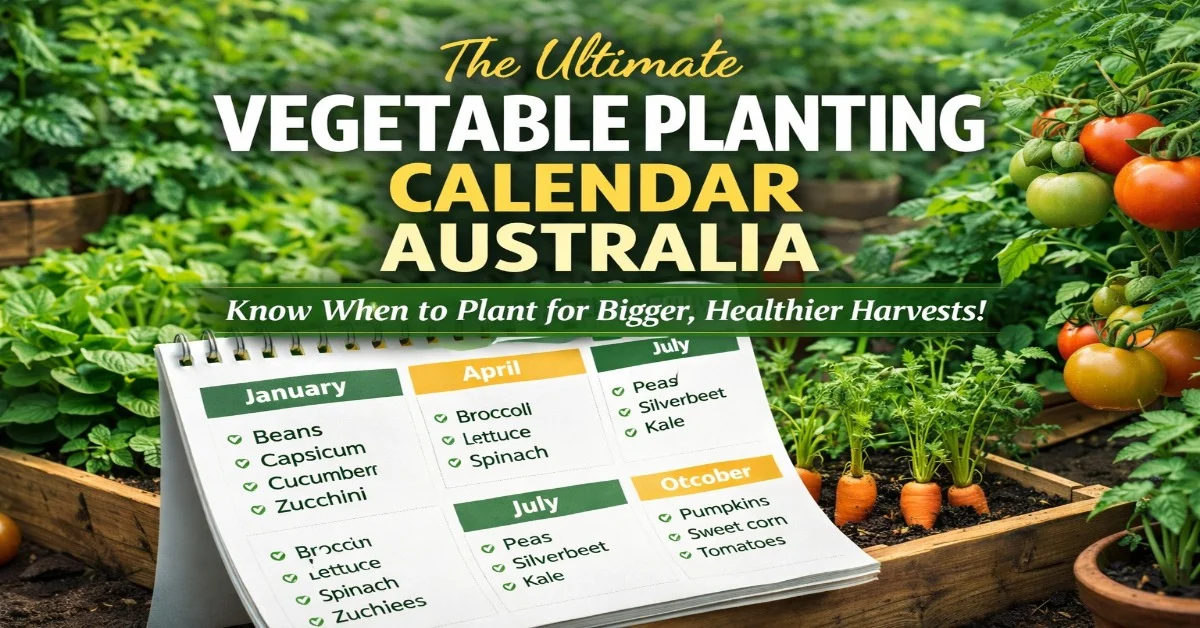
Here’s a simplified calendar for when to plant vegetables to guide you:
January
Plant beans, cucumbers, zucchini, and sweet corn.
February
Plant capsicum, tomatoes (early), and lettuce.
March
Plant carrots, broccoli, spinach.
April
Plant peas, onions, and silverbeet.
May
Plant garlic, cabbage, and kale.
June
Plant broad beans and onions.
July
Plant peas, lettuce, spinach.
August
Start tomatoes (warmer regions), beans.
September
Plant zucchini, corn, and cucumber.
October
Plant pumpkins, tomatoes, and capsicum.
November
Plant sweet corn and beans.
December
Plant cucumbers, eggplant, and zucchini.
This month-by-month vegetable planting calendar for Australia keeps your garden productive year-round.
Regional Planting Differences Across Australia
Because climates vary, region-specific guides matter.
Vegetable Planting Guide South Australia
South Australia has a temperate climate. Summers are hot, winters mild. Follow your vegetable planting guide for South Australia carefully to avoid summer heat stress and winter frost damage.
Best strategy:
- Spring for tomatoes and corn
- Autumn for leafy greens
- Winter for peas and garlic
Vegetable Planting Guide Western Australia
Western Australia has Mediterranean and tropical zones. A tailored vegetable planting guide for Western Australia ensures success.
Perth region:
- Autumn is excellent for brassicas
- Spring is ideal for tomatoes and beans
Northern WA:
- Dry season planting differs significantly from the southern regions
Using a location-specific vegetable planting calendar in Australia dramatically improves success.
Free Planting Calendar Australia – Why It Helps
Many gardeners search for a free planting calendar Australia download to simplify planning. A printable seasonal vegetable chart allows you to:
- Track planting dates
- Plan crop rotation
- Avoid overplanting
- Improve soil health
A well-designed seasonal vegetable chart in Australia becomes your yearly blueprint.
Seasonal Vegetable Planting Guide Australia for Beginners
If you’re new to gardening, follow this simplified seasonal vegetable planting guide Australia approach:
Start small
Choose 5–6 easy vegetables.
Follow climate zone timing
Use your local vegetable growing calendar for Australia.
Improve soil
Healthy soil improves everything.
Rotate crops
Avoid planting the same family in the same spot each season.
Beginner-friendly crops include:
- Lettuce
- Spinach
- Beans
- Zucchini
- Tomatoes
Following a structured vegetable planting calendar, Australia removes guesswork and builds confidence.
Vegetable Compatibility Planting Guide for Better Yields
A vegetable compatibility planting guide (also called companion planting) helps plants support each other.
Examples:
Tomatoes + Basil
Improves growth and repels pests.
Carrots + Onions
Helps deter carrot flies.
Corn + Beans + Pumpkin
Classic “Three Sisters” combination.
Companion planting enhances the results of your vegetable planting calendar Australia by improving natural pest control and productivity.
How to Start Planting Vegetables at Home
If you’re wondering how to start planting vegetables at home, follow these steps:
Choose a sunny location (6–8 hours of sunlight).
Prepare nutrient-rich soil.
Follow your regional vegetable planting calendar for Australia.
Water consistently, but avoid overwatering.
Start with seasonal crops.
Planning is the foundation of a productive vegetable garden.
What Vegetables Are in Season Now in Australia?
Seasonality depends on region, but generally:
Summer
Tomatoes, capsicum, zucchini, and cucumbers.
Autumn
Broccoli, carrots, spinach.
Winter
Garlic, peas, cabbage.
Spring
Beans, corn, pumpkins.
Using a reliable seasonal planting guide, Australia ensures you grow vegetables at their peak performance.
What Is the Best Time to Start Planting Vegetables?
The best time depends on your climate zone. However:
- Spring is ideal for warm-season crops.
- Autumn is excellent for cool-season crops.
A complete vegetable planting calendar for Australia ensures you never miss the optimal planting window.
What Month Is Best for Planting Vegetables?
There is no single best month. Instead, follow a rotating system based on seasons:
- September–November for summer crops
- March–May for winter crops
This is why using a vegetable planting calendar in Australia is essential rather than relying on guesswork.
When to Plant Vegetables Australia Wide
If you search for when to plant vegetables in Australia, the answer always depends on:
- Frost dates
- Soil temperature
- Rainfall patterns
- Climate zone
A structured vegetable garden planting guide tailored to your region in Australia eliminates uncertainty.
Final Thoughts: Plan Smart, Grow Abundantly
Following a trusted vegetable planting calendar is key to thriving gardens and continuous harvests. Whether you’re using a printable calendar for a vegetable planting chart, downloading a free planting calendar Australia, or referencing a detailed vegetable growing calendar Australia, proper timing transforms your gardening success.
With the right seasonal strategy, companion planting techniques, and climate awareness, your garden can produce vibrant, healthy crops year-round.
Start planning today using your personalised vegetable planting calendar Australia, and enjoy stronger plants, bigger harvests, and total confidence in every planting season.
Leave a Reply